
— Reorganization (of the organ electrics) —
 Turning OLD into NEW
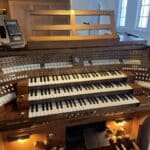
The modernized Klais organ in the Franciscan monastery church of St. Barbara in Mönchengladbach
After the destruction of the original organ during the Second World War, it was decided to commission the new instrument from the renowned organ builder Johannes Klais from Bonn. The new organ, which was built in 1954 on a side gallery close to the altar and choir stalls, is an electro-pneumatic cone chest organ with 30 stops that follows the neo-baroque sound ideal.
Despite its baroque orientation, the organ offers a particularly rich selection of eight-foot voices, which have been carefully voiced to ideally support the singing and choral prayer in the choir loft. This balanced and subtle sound design shows how important the liturgical context was in the planning and disposition of the organ. By combining the traditional sound ideal with the technical possibilities of the 1950s, an instrument was created that fits perfectly with the Franciscan church, both musically and aesthetically.

Over the years, the Klais organ in the Franciscan monastery church of St. Barbara in Mönchengladbach has been modified several times to meet the changing musical requirements and wishes of the organists. In 1974, Weimbs Orgelbau made minor changes to the voicing at the suggestion of the organist at the time.
In 1980, the Klais company itself carried out a comprehensive overhaul of the organ, during which the voicing was once again fine-tuned. The aim of this overhaul was to further improve the tonal variety and precision of the instrument.
In 2011, a long-cherished wish of the current organists was finally fulfilled. Thanks to a favorable opportunity, windchests and pipe material from the Verschueren company in Heythuysen were acquired. The project, which included the addition of an Auxiliary division to the organ, was led by Matthias Wagner, who was working for Verschueren at the time. He planned and realized this extensive extension, which enriched the sound of the organ and further adapted it to the liturgical and musical needs of the church.
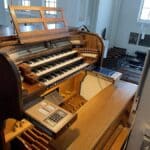
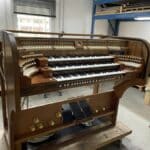
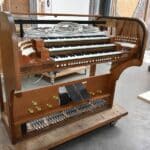
In order to realize the extension project for the Klais organ of the Franciscan monastery church of St. Barbara in Mönchengladbach, it was first necessary to present a convincing concept for the monument authority. A central aspect of this was that the new organ should be as discreet as possible so as not to detract from the aesthetic effect of the church building. At the same time, it was important to the organists to retain the old, much-loved Klais console from the 1950s. This was impressive due to its ergonomic advantages, the aesthetically well thought-out arrangement of the stop switches and the charming furniture style of the time.
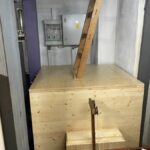
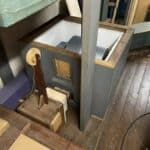
To control the new stops, a complete stop section from a Klais organ built in 1940, which was later demolished, was integrated so that the new parts fit seamlessly into the existing design of the console. The Auxiliary division was designed as a large Swell division and rests on four wooden supports that raise the windchest to the same height as the Hauptwerk. The case of the Schwellwerk was painted white in order to appear as inconspicuous and “invisible” as possible.
With the expansion of the organ by ten additional stops, the instrument experienced a significant tonal enrichment. The newly acquired richness of sound not only offered a wider range of musical expression, but also increased the flexibility of the instrument, both in liturgical settings and in concert performances.
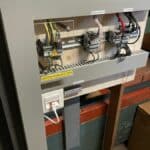
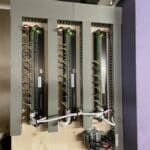
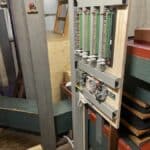
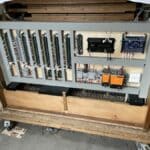
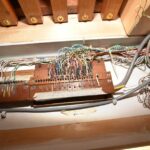
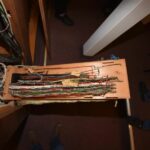
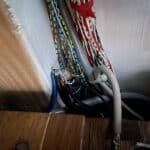
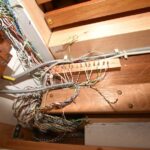
In 2020, the Klais organ in the Franciscan monastery church of St. Barbara in Mönchengladbach was due to have its electrics refurbished after new fire safety regulations came into force. The organ electrics of the organ, which was built in 1954, had become outdated and the expert from the Aachen diocese identified numerous defects that required immediate repair. These defects included organ transformers and rectifiers that were no longer permitted, cable cross-sections that were too small, a lack of underfuses in the division supply lines, unreliable individual fuses for the tone action, a lack of spark suppression varistors in the tone relay magnets, exposed distribution terminals and outdated control cables with cotton sheathing that were prone to short circuits. The key contacts were also worn and burnt in.

Initial situation

In 2020, three reputable organ builders were contacted to obtain quotes for the urgently needed electrical renovation and other work on the wind supply. After a site visit by the organ builders and careful evaluation of the offers, the monastery’s support association decided in May 2021 in favor of the offer from Weimbs Orgelbau. However, the second wave of the coronavirus and the insolvency of organ parts supplier Laukhuff in spring 2021 caused considerable delays in the procurement of materials and scheduling.
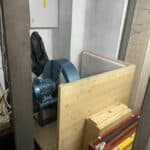
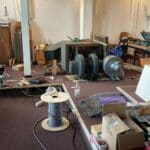
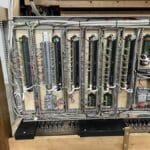
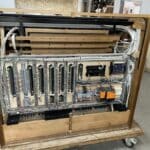
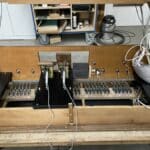
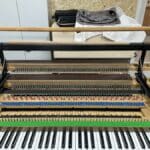
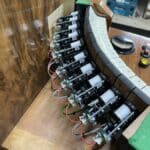
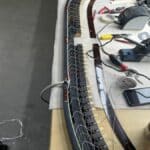
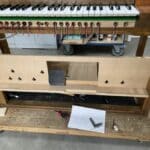
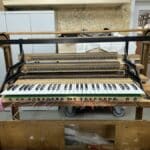
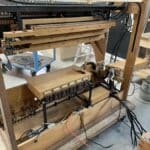
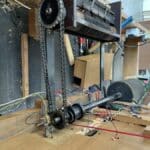
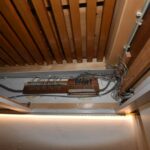
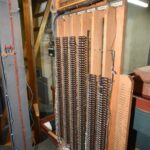
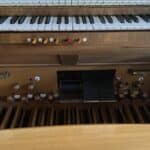
It was not until June 2022 that the console could be transported to Weimbs Orgelbau in Hellenthal to begin the lengthy renovation process. The work included the complete rewiring and comprehensive renewal of the console. The congregation had to make do with an emergency organ for over a year before the work came to a temporary conclusion in August 2022 and the Klais organ shone in new splendor.
Despite delivery difficulties in procuring the necessary organ parts for the renovation, Weimbs Orgelbau was able to develop an innovative replacement concept by using alternative manufacturers for the setting systems. The original console was completely retained in its familiar appearance and functionality, including the aesthetically pleasing, classic stop switches from Klais. These were fitted with special switching magnets so that they can now be operated by the modern setter system.
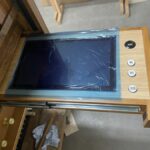
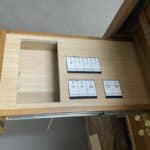
The pushers for operating the setter below the first manual were also added. The organ’s pedal system was also reorganized to improve operability. New pistons were installed, which are responsible for controlling the hand stop functions, the two free combinations, the roll, the sequencer and a scroll function for a tablet. There are two newly installed drawers on the right and left under the first manual. The left drawer contains the song indicator as well as switches for key bindings, sub and super couplers and the tremulants. The right-hand drawer contains a touch display, which is used to control the setter management, freely programmable couplers, the transposing device, a recording and playback control and midi access.
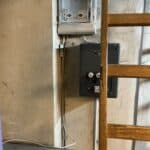
For the electrical installation, Weimbs Orgelbau received active support from the janitor of the monastery, who works as a master electrician. This made it possible to achieve considerable cost savings.


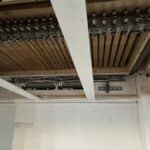
some impressions from the construction of the organ