
Mold Removal Treatments
Mould in organs and churches in general is an increasing issue. The sometimes significant mould infestations in and around the organ require a systematic treatment.
Before starting any mould removal treatments, it is paramount to first undertake an analysis to identify and eliminate the root cause of the mould infestation.
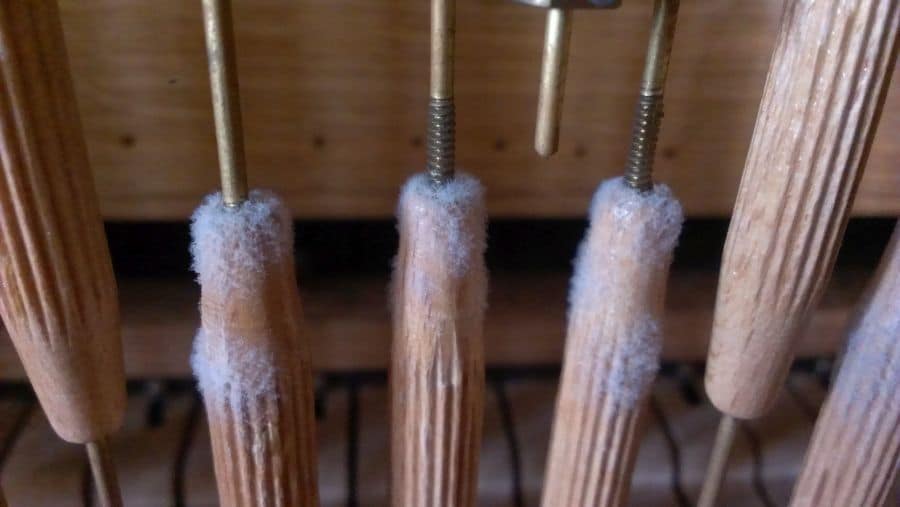
The causes of mould are complex and diverse:
- Increased humidity as a result of structural damage, the current climate change and / or the changed heating habits
- Lack of ventilation, partly as a result of the reduced frequency of use of the church
- No air circulation on the organ stage and / or in the organ itself
- Consequences of condensation hot-spots
Due to the increased number of mould infestations we encounter, we have made enquiries with various institutions to receive scientific advice for treatments. Old home remedies, such as vinegar solutions, are ineffective or even counterproductive, as they provide a breeding ground for new mould. We therefore proceed with the removal of mould as follows:
- Putting on protective clothing, gloves and respiratory protection (protection class “P3”)
- vacuum cleaning the affected areas using special vacuum cleaners (filter classification “H”)
- Treatment of affected areas with an 80% alcohol solution or
- based on hydrogen peroxide in the form of a combination of stabilizing fruit acids and active oxygen, which causes the disintegration process of hydrogen peroxide to slow down. As a result, the solution works long enough to break through the catalases, the protective mechanisms of the mould, and consequently kill the fungus cells.
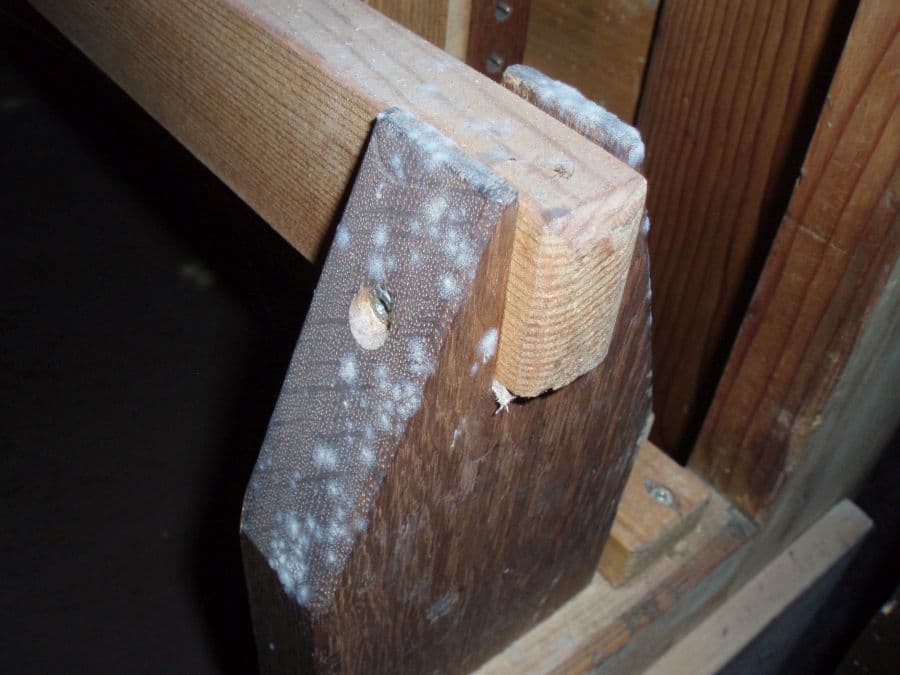
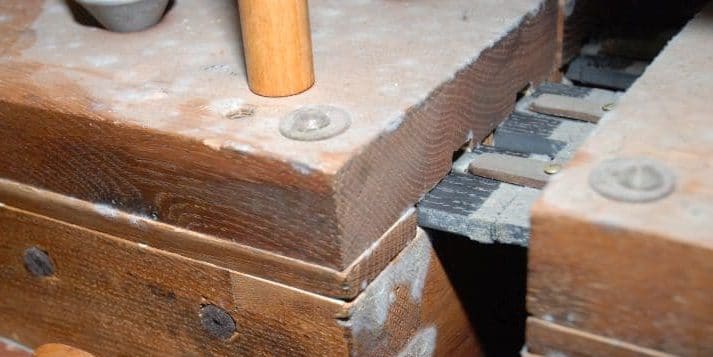
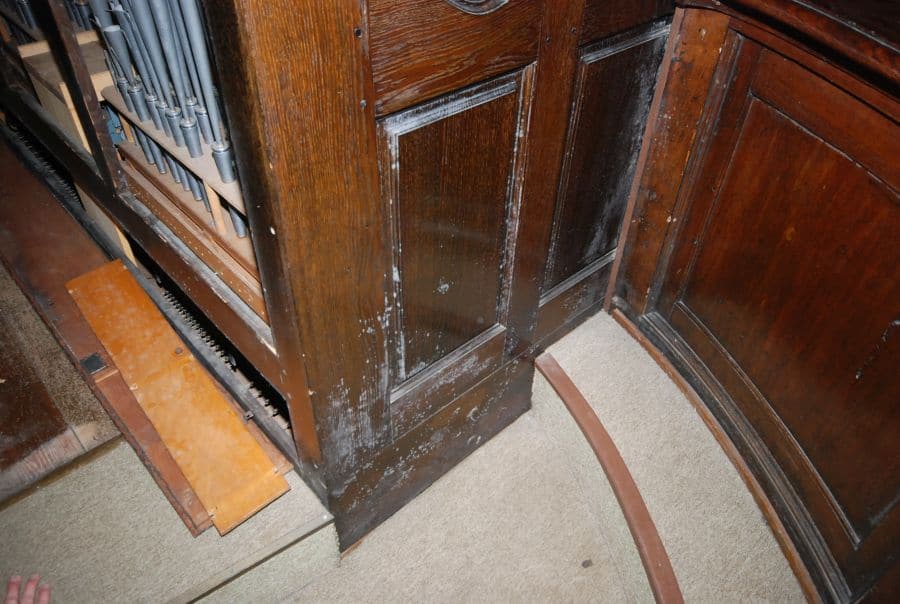
In addition, there are other accompanying measures to be taken, such as enabling the necessary air circulation (possibly perforations in the organ case, etc.) and a detailed consultation with regard to a professional ventilation of the church building.
The diocese of Aachen has published a corresponding information flyer.
On the linked leaflet you will find some further information
to properly heat and ventilate a church building.