
Reconstruction of Organ Electrics
Modernisation / renovation of obsolete, no longer VDE-compliant organ electrics!
By legal definition, an organ with an electric blower is classed as an electrical appliance. This means that all organs with an electrical blower must also comply with the rules and regulations for electric appliances.
Unfortunately, in many older organs, the power supply and wiring of the various electrical components no longer comply in many respects with the current VDE or fire protection regulations.
Contrary to a general assumption, it should be noted that there is no grandfathering for existing old systems. The operator (usually the respective parish) is responsible for the compliance of their electrical appliances and must therefore rectify any non-compliant installations when made aware of those. Due to this fact, a few years ago, this topic has increasingly been the focus of attention at the respective institutions, especially on the basis of liability issues.
To explain the many regulations in detail now would not be concise. Therefore, we have collated some important information in a leaflet.
Leaflet „Outdated Electrical Installations“ 
The most common deficiencies are:
▪ outdated, not short-circuit proof organ transformers
=> in case of a short circuit, the primary side 400V could hit the secondary side.
Modern power supply units must comply with the so-called protection measures defined according to SELV (Safety Extra Low Voltage) and PELV (Protective Extra Low Voltage) (safe separation of primary and secondary side).
▪ too small sized and selected from the wrong material bus bars
=> Brass commonly used in organ building over many years has a much higher lead resistance than copper and is therefore in most cases it was chosen too small in cross section.
▪ the lack of short-circuit fuse
=> In most older organs you will not find fuse elements in the electrical wiring of the organ controls that provide an interruption of the current flow in case of a short-circuit. It is imperative that such a security system must be retrofitted.
Example photos of executed reconstruction work
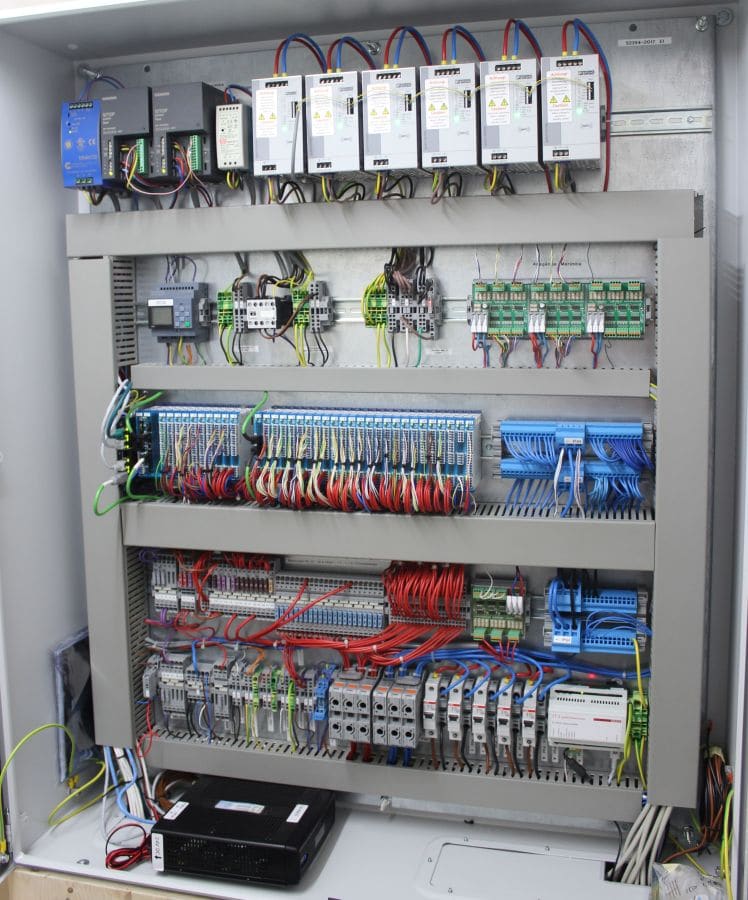
Example of a key and stop control system of a new organ
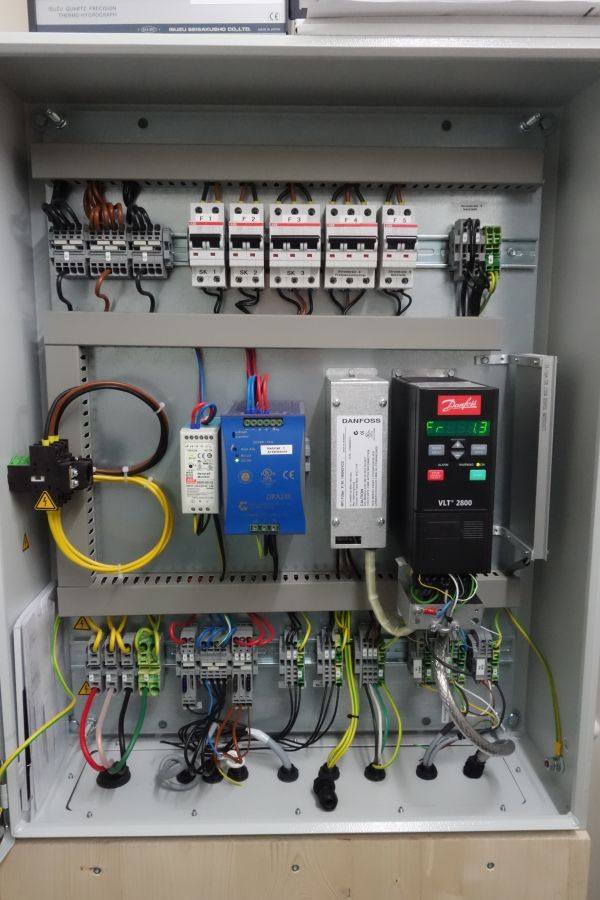
Example of a power supply unit for an organ with frequency converter for the organ blower
Even executing electrical reconstruction work in the course of a clean and overhaul or during a general renovation, it is recommended to incorporate contemporary materials.

Example of an electronic coupler control as a replacement for the previous electro-mechanical system
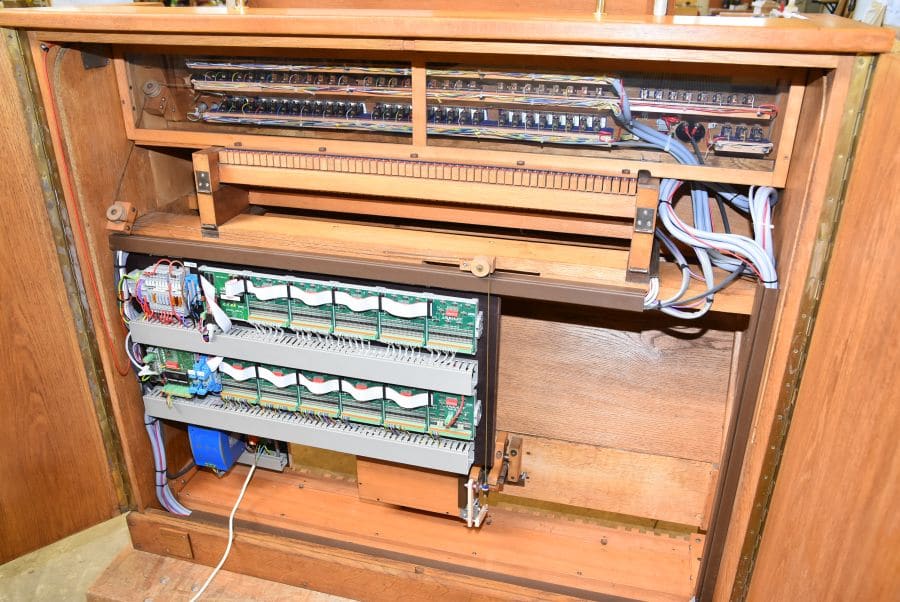
Example of the use of electronics instead of the old electro-mechanical breaker boxes
However, a new wiring in the course of a restoration project represents a special, additional difficulty. In a historic organ, modern materials usually appear foreign and unaesthetic.
The objective is usually to match the look of the new organ control components and wiring in all details as close to the original as possible whilst complying with all applicable regulations. The following pictures show the implementation using the example of the Sauer organ (1938) in the Epiphaniaskirche in Cologne-Bickendorf. During this project we were supported and accompanied by Dipl.-Ing. Thomas Kroll.
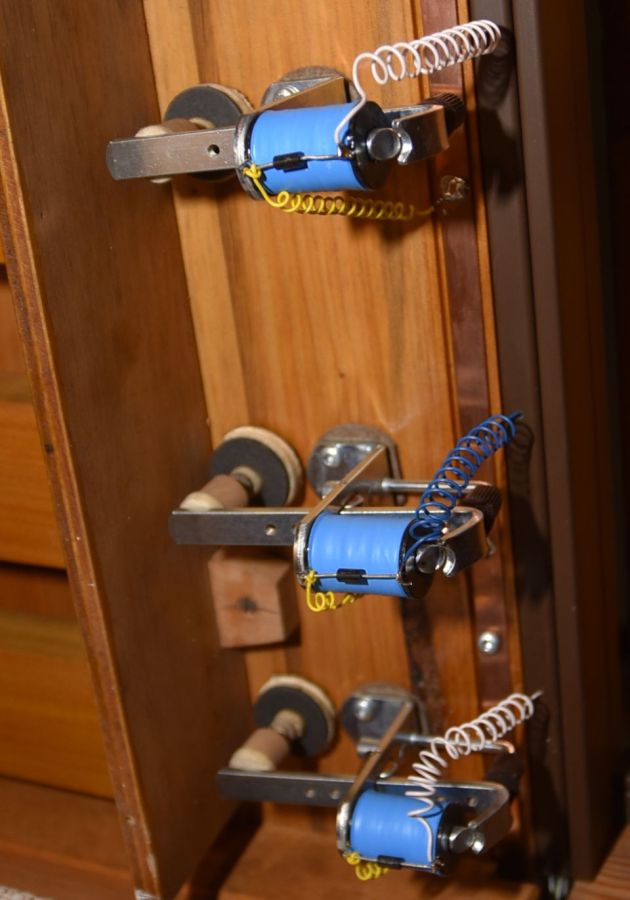
New magnets with spark-extinguishing varistors and a new bus bar made of copper with insulating base

Example selenium disks: they age and must be urgently replaced
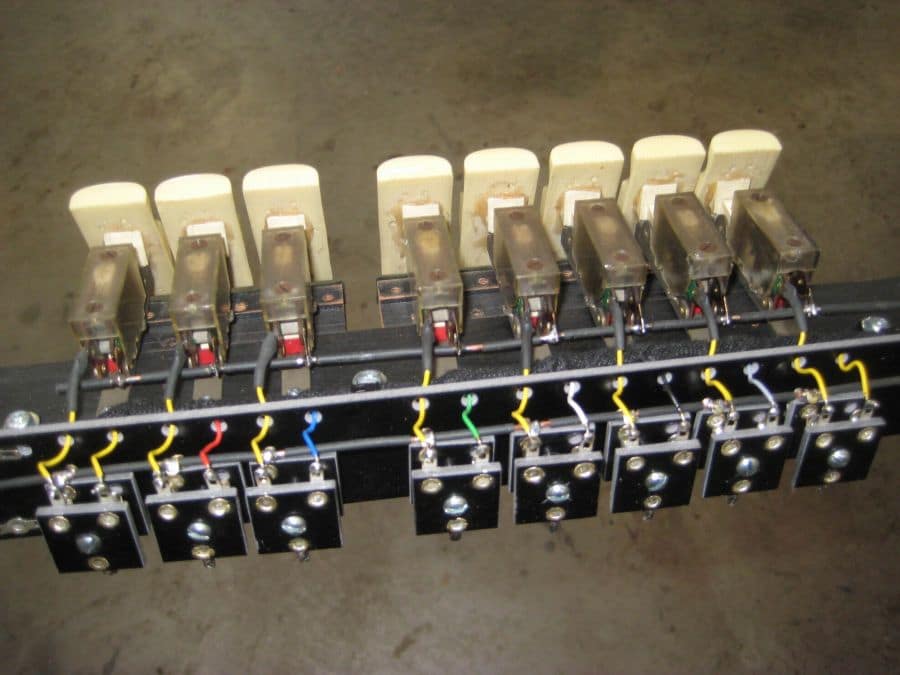
Instead of the old selenium disk construction, a new, historically compatible construction with diodes was manufactured here. The function is identical and the optics are deliberately chosen in style of the selenium disks.
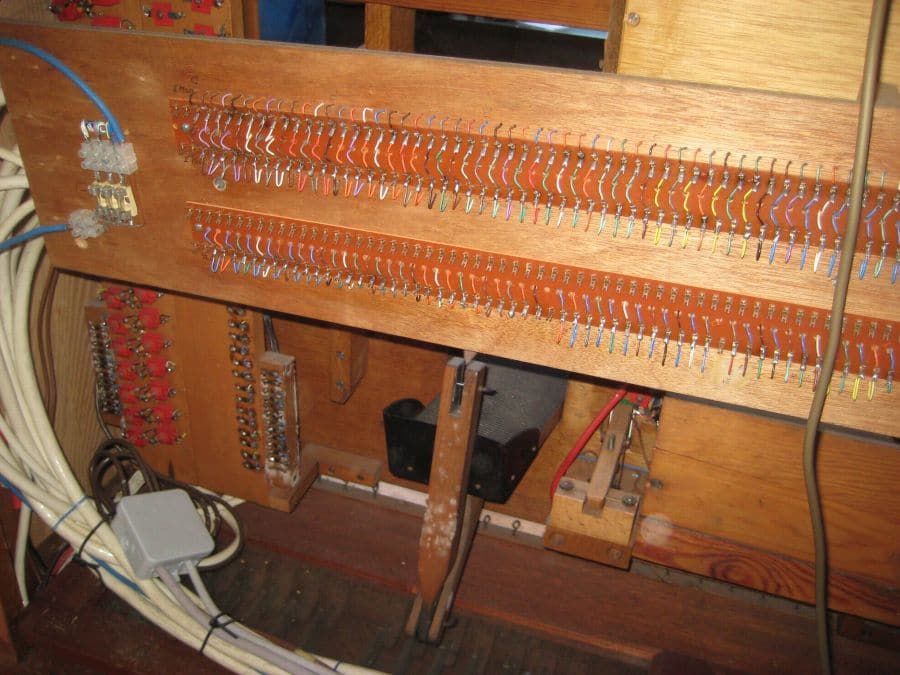
Rear view of an electric console with old selenium disc technology and open wiring.
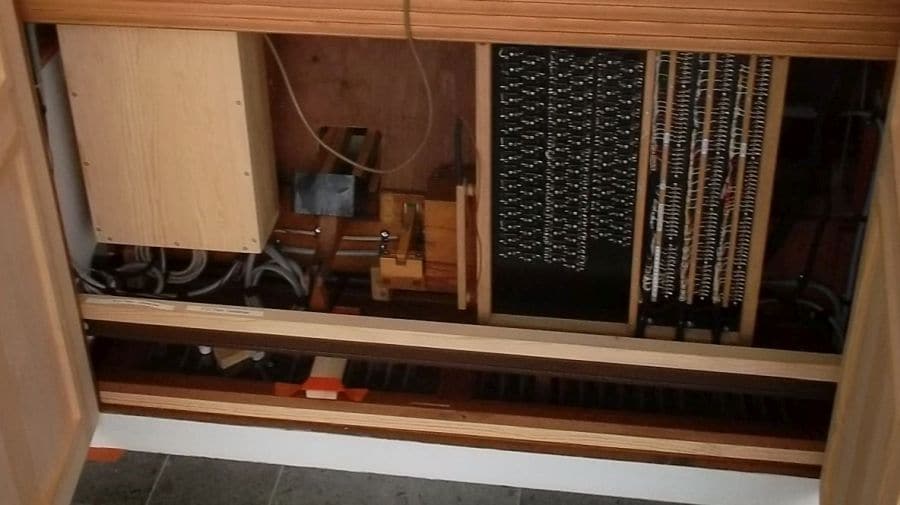
New, historically compatible diode matrix in conventional design for a historic console.