
The Action System in Zülpich, St. Peter
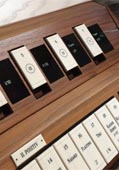 It is hardly possible to fully describe such a complex control system as it is used in the organ of Zülpich.
We have therefore collated some select features with example screen-shots which is nowhere near comprehensive in demonstrating the entirety of possible functions. Nevertheless, we hope to have caught your interest to experience a live demonstration of the organ.
Basically, the Organ in Zülpich is a classic slider chest organ with electric key and stop action and supporting sequencer. Although it features, if necessary, an innovative and adaptable action system.
START SCREEN
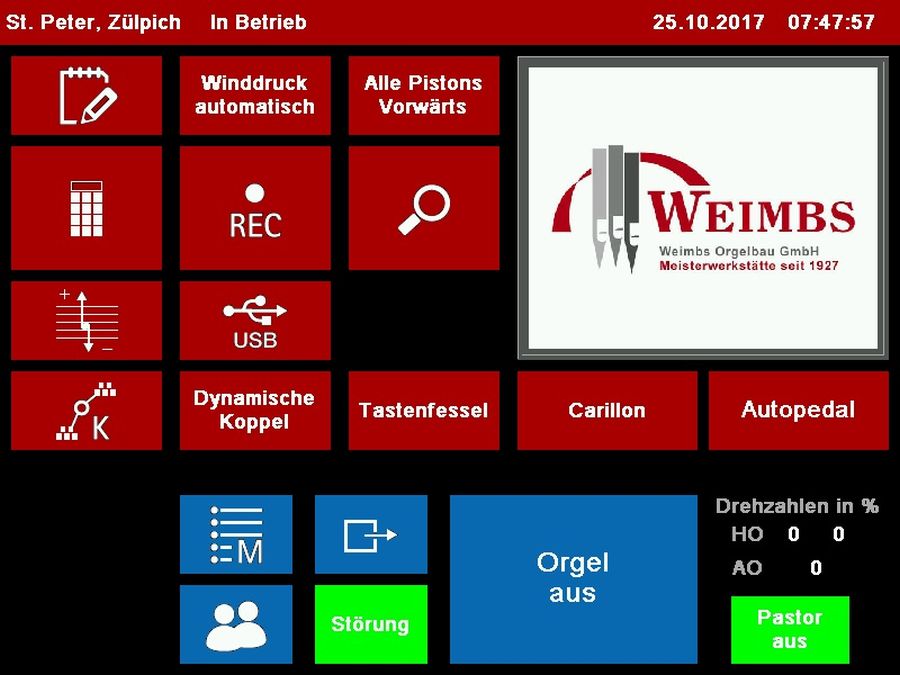
We have taken great attention to the fact that a local organist should be able to find its way through the complex system immediately. After logging in using the their own or provided transponder key can be switched on in the usual manner. Regular organ playing and other additional applications are available without the provided touch-screen.
Starting from this home-screen, the most important functions are readily available and can be selected directly. Further applications can be selected via the provided sub-menus.
COUPLER CONFIGURATION
Additional, individually programmable couplers are set up via a coupler configurer.
As the activation via the touch-screen, especially during improvisations is to date somewhat alien, we have added rocker switches with a display that can be individually labelled. This enables the organist to transfer is previously, on the touch-screen, programmed couplers to the rocker switches and label them.
During playing the touch-screen can then be utilised again.
In addition to the five rocker switches, ten more slots on the drive space can be utilised via the touch-screen.

Display and selection menu via the touch-screen
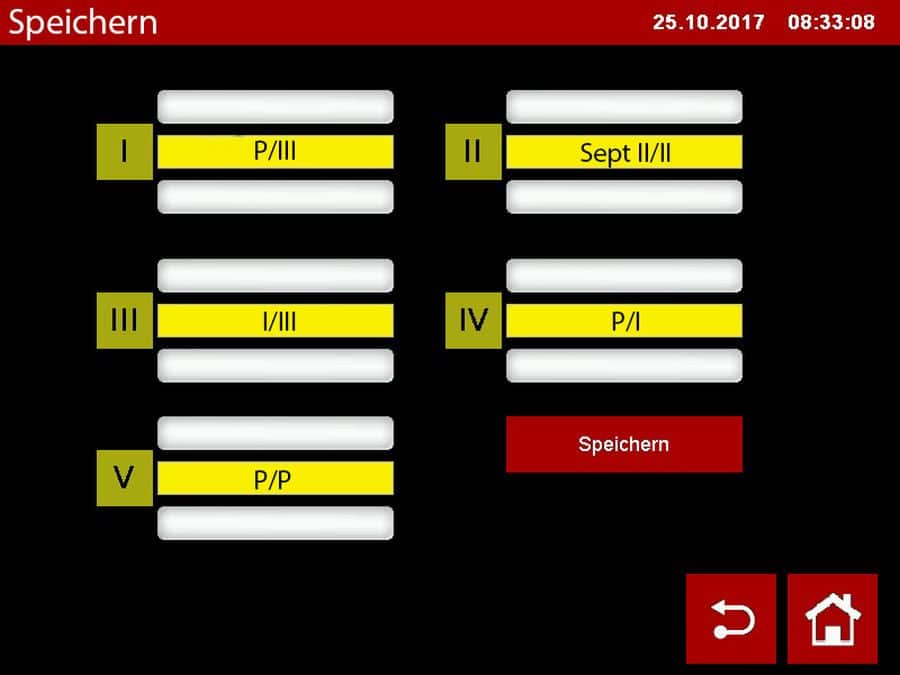
Area to lable the rocker switches for the couplers
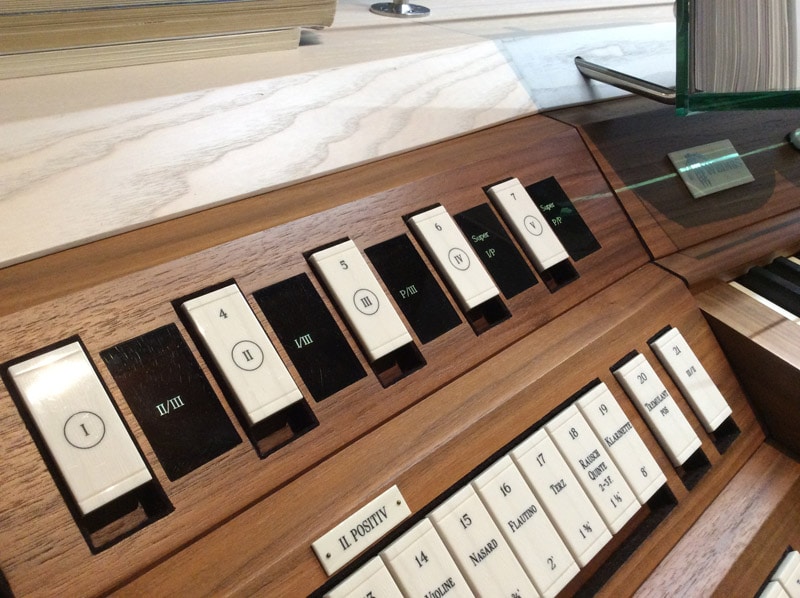
Result
INTERVAL COUPLERS
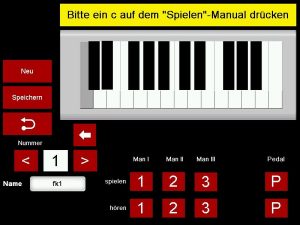
Programming of the interval couplers – the program self-explanatory guides through the few steps to custom create couplers.
DYNAMIC COUPLERS
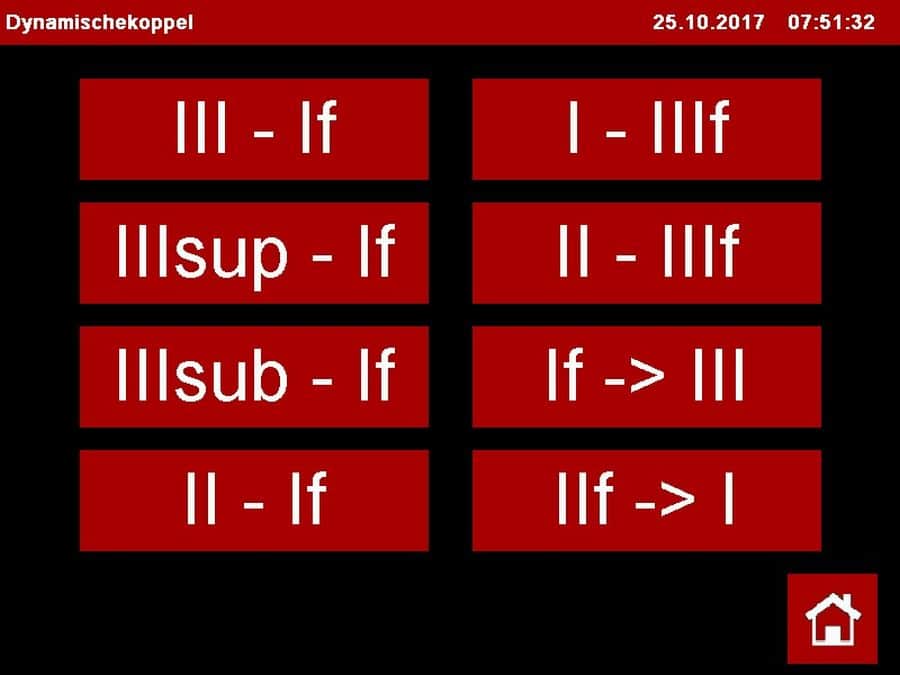
Similarly known in cinema organs, with the Second Touch feature certain applications can be activated when playing forte passages. The activation of these applications is always per key or tone and does not apply to the entire manual. Thus, the coupler II / If causes the II. Manual to be individually coupled when playing fast passages on I. Manual. Or with a IIf-> I, that in case of a quickly played passage on Manual II, the same is replaced by the active stops in the I. Manual.
The respective velocity values can be set up by the organists themselves.
It is also possible in a simple way to change the key’s leeway and the firing points. This is of particular interest for electrical couplers in connection with an otherwise mechanical key action or in large organs being played from different locations within the church to mitigate the time difference between pressing the key and sounding the respective note.
Depending on the situation of the microphones, it may be useful to turn them off while playing the organ. In Zülpich there is an automatic trigger which mutes the microphoes. Via a separate menu, the trigger points can be easily adjusted.

In the nave and also in the Anno Chapel of the Church of St. Peter in Zülpich several connection points for the mobile console have been installed. Via these connection points it is also possible to play the organ via a standard portable keyboard utilising the integrated MIDI interface. This may be interesting during a christening, if you are a musician and want to be in close proximity to the congregation without having to move the large console.The selection of the division and stops takes place via an additional standard touch-pad and
Touch pad and a corresponding VNC-Application. The operation is self-explanatory.

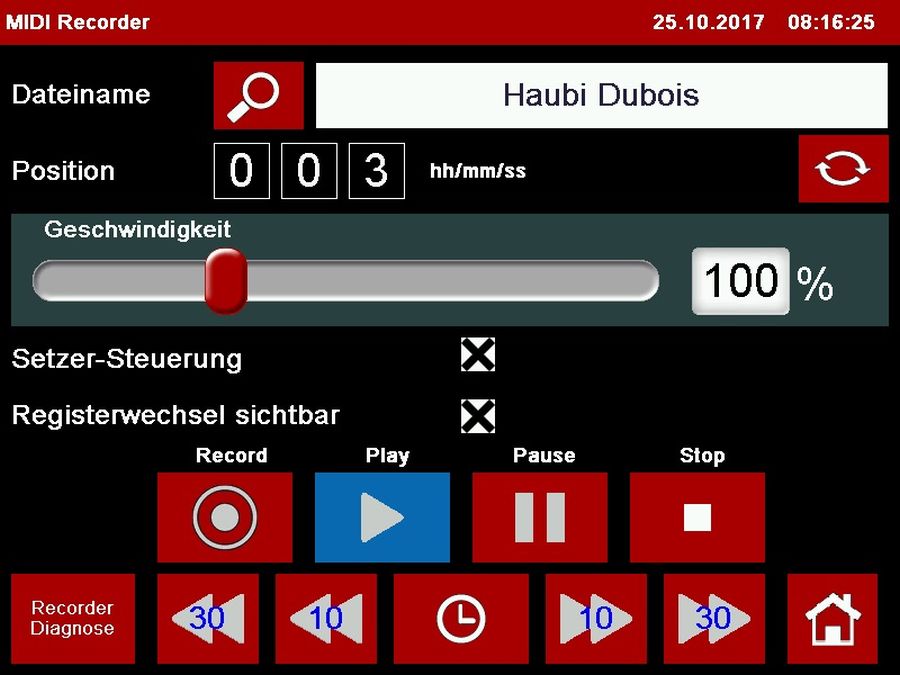
With this second additional touch pad it is also possible to access the recording and playback function. This makes it much easier to listen to the stop selection, as you can change the stops from the position of the audience and thus have their immediate sound experience. After saving on the touch pad, the setting is then stored into the sequencer.
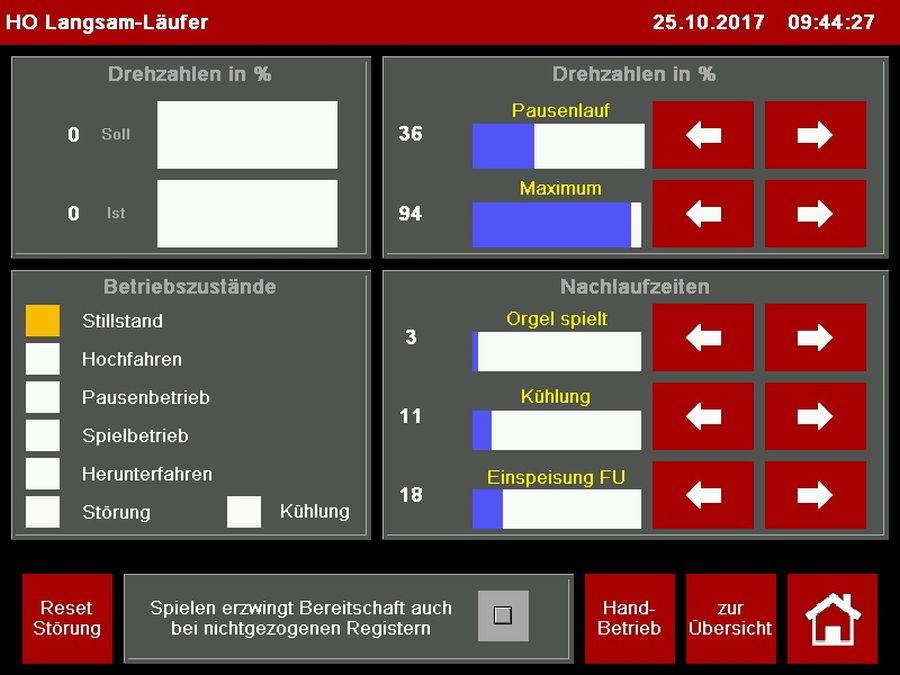
In addition to the already possible wind mitigation via a rotary potentiometer, a program monitors the stop selection and adjusts the wind power accordingly. This sounds not spectacular at first, but offers many advantages. In the very direct acoustics in St. Peter and the immediate vicinity of the organ to the listener, any technical noise is annoying, including any operating or wind noise of the three wind generators. The organist has the option to set the required wind demand for each stop and to save it permanently. For example, we have supplied the Subbass 16 ‘ with less wind at a small stop selection and thus created a softer bass. With increasing registration of the softer bass turns back into a Subbass. Nothing new in Romanticism, but now achieved in a different way.
Here are two screenshots of this function on the touch-screens.
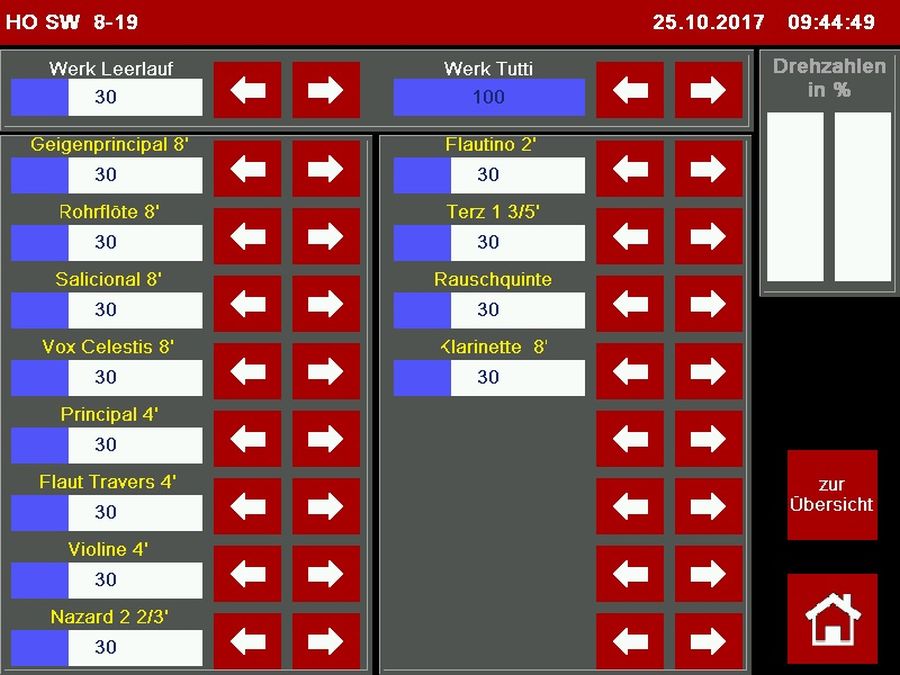
Following, some more screenshots with a short description.
But the functions and settings that are shown here are by no means all of them.
Cantor Holger Weimbs is happy to introduce you personally to the organ in Zülpich, St. Peter.
This is a growing system indeed. We work closely with the organist Mr. Weimbs for further development of this control system. Ideas developing whilst playing the organ are communicated. Also, he gets a lot of visitors from interested organists and their opinions and suggestions flow into a large pool of ideas, which is constantly considered providing feasibility.
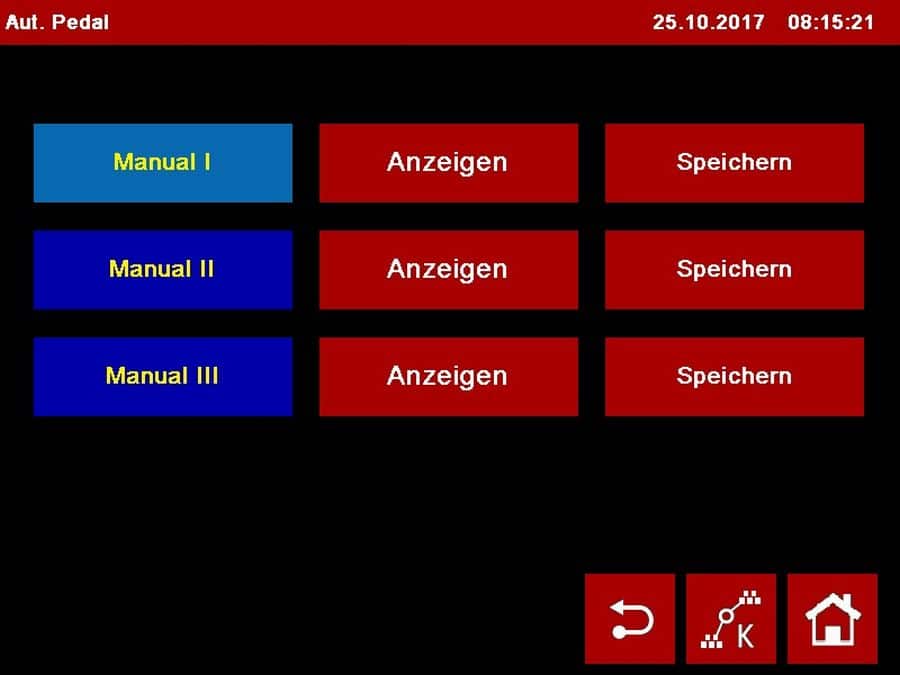
Selection of stops for the automatic pedal. This is especially interesting for a quick change between different divisions or entire organs. For example in Zülpich between the main organ and the organ located in the Anno chapel.
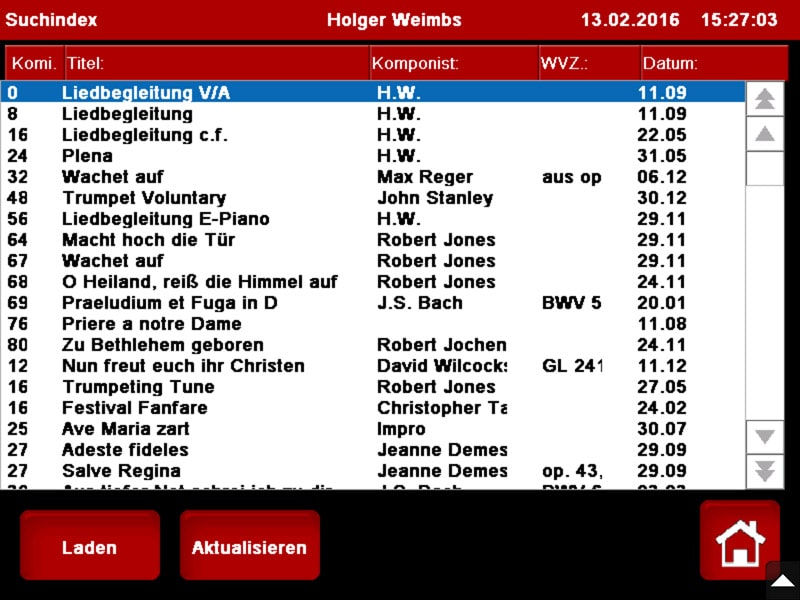
Menu for managing the squencer settings with a search window in the subject overview.
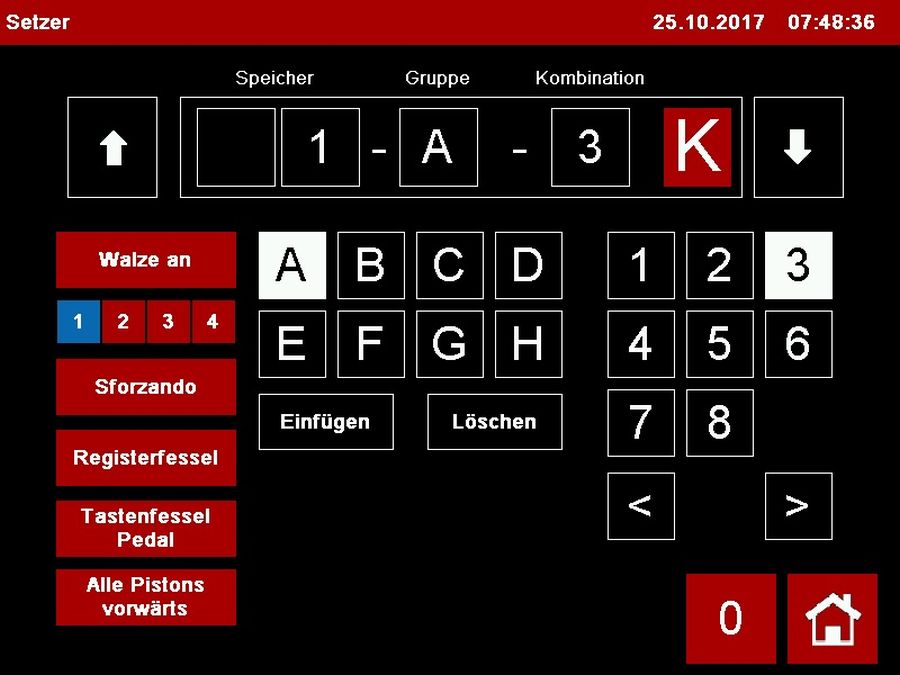
Operation of the sequenzer and further applications e.g. Sforzando, etc.
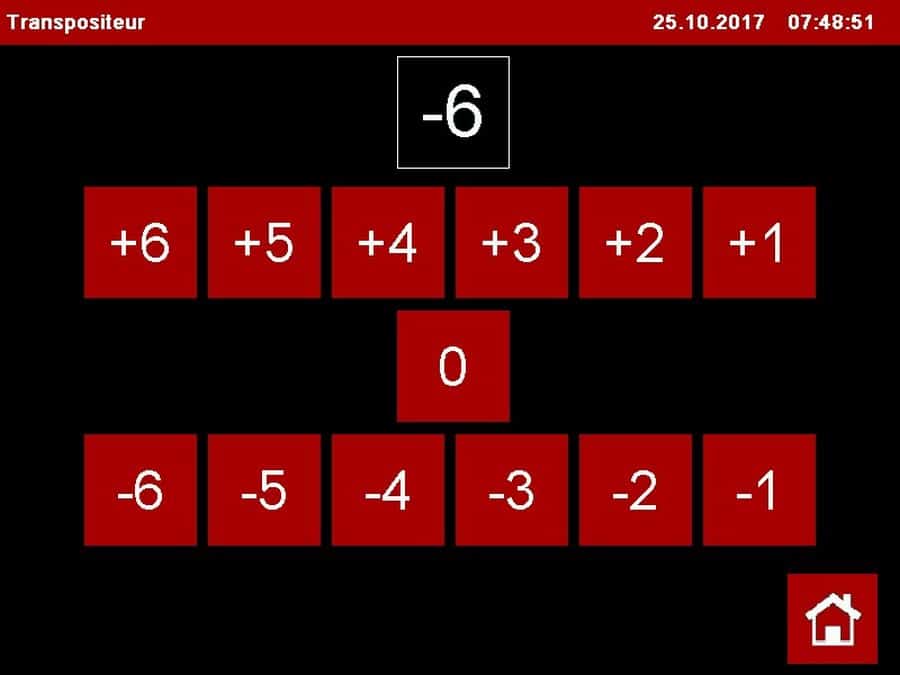
Transposition tool
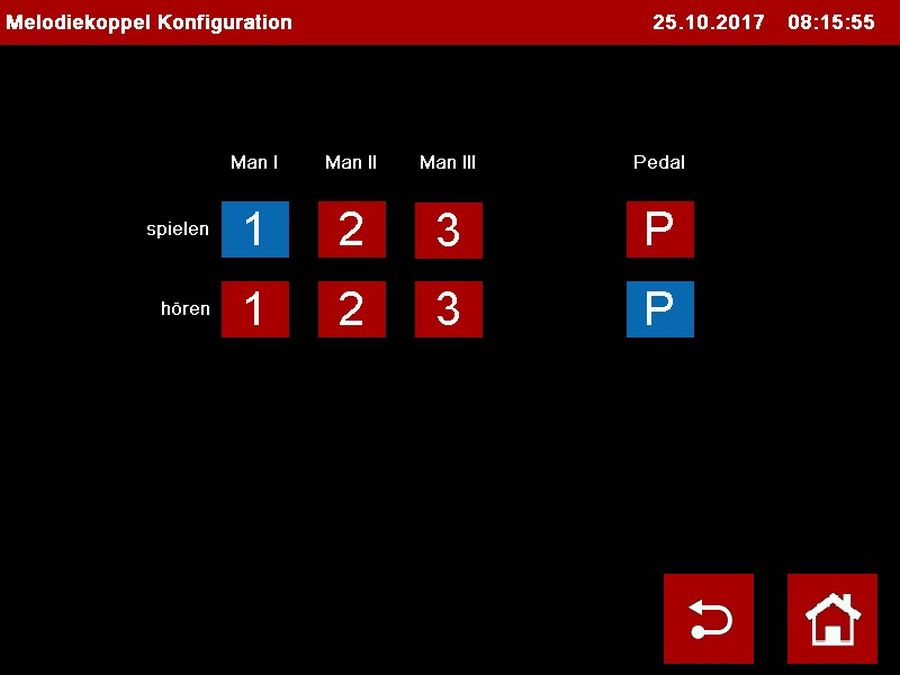
Treble coupler configuarion
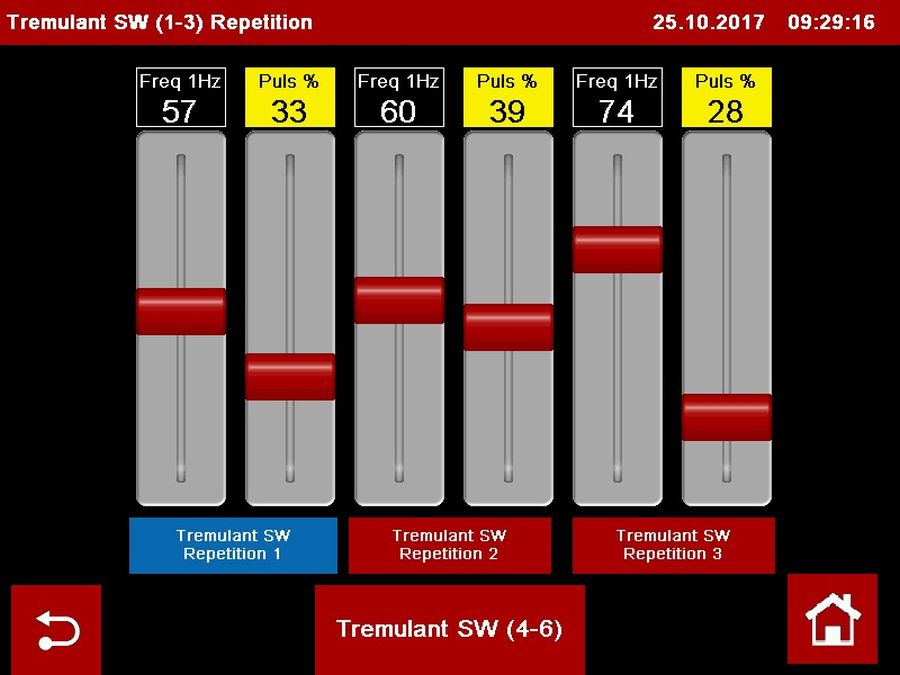
Seperate configuration of tremulant intensity and speed.
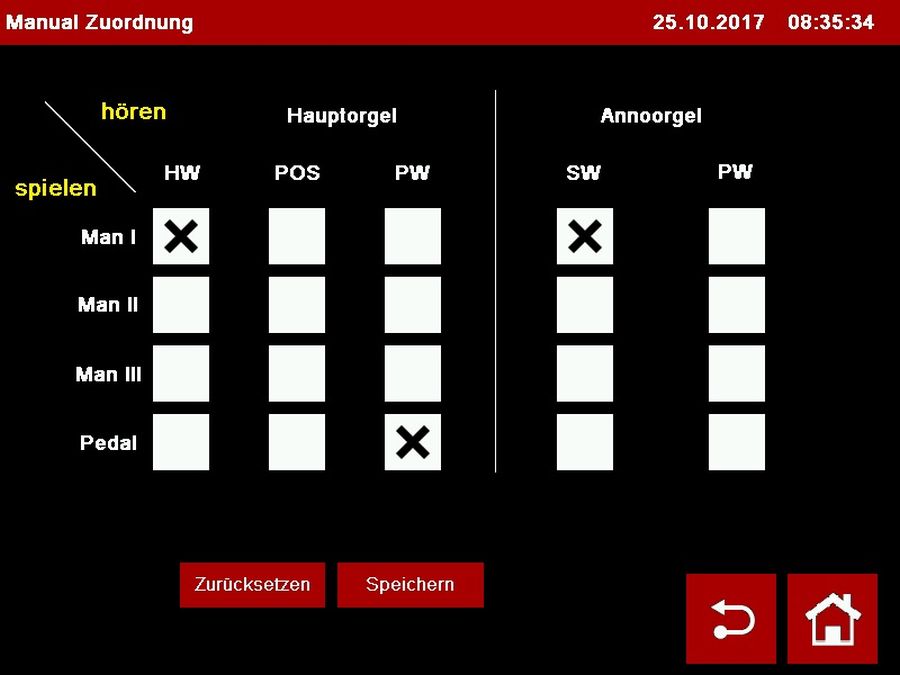
Manual assignment