
— Restoration of the Klais organ from 1940 —
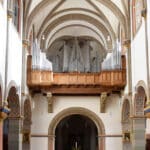
 With its striking silhouette, the Catholic Rosary Church in Bad Neuenahr has shaped the townscape for more than a century. Located in the immediate vicinity of the town hall, it is visible from afar with its 65-meter-high bell tower, numerous small towers, and multi-sectioned roof landscape. Construction of the church began in 1898 according to plans by architect August Menken.
The flood disaster in the Ahr Valley in the summer of 2021 also hit the Rosenkranzkirche hard, leaving considerable damage to the church building and its interior. The Klais organ from 1940, with the opus number 953, was also affected. Immediately after the cleanup work began, the instrument was largely dismantled and stored in a secure location. In the following years, the foundations for the renovation of the church and the restoration of the organ were laid.
As the project was mainly financed by flood relief funds, the work focused on the careful renovation and restoration of the existing historical substance.

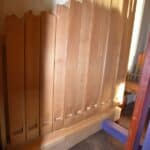
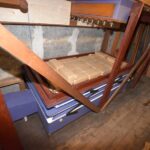
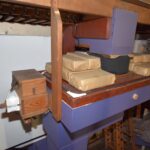
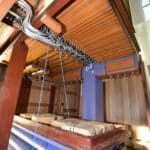
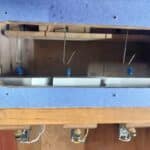
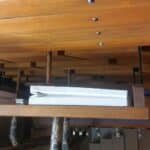
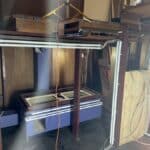
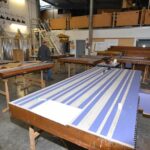
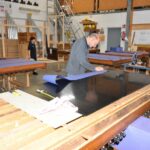
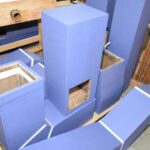
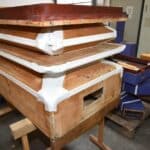
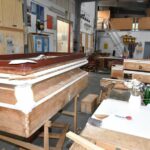
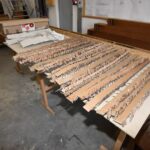
In our workshop in Hellenthal, the double bellows were thoroughly overhauled, re-leathered, and re-papered. The damaged paper lining of the wind channels was also completely replaced.
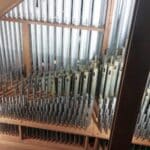
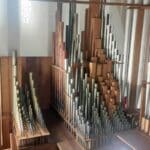
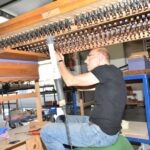
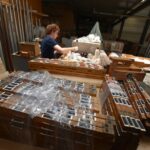
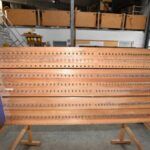
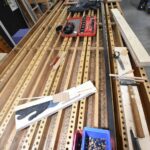
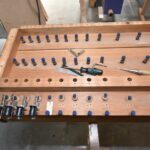
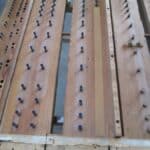
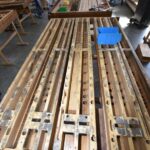
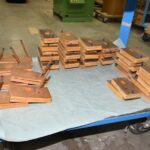
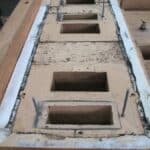
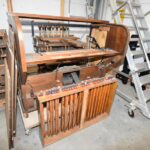
The windchests underwent extensive restoration. All tone cones were removed, all parts were carefully cleaned, and the cone seats were reworked. The cones were then refitted; some of them were also re-leathered. The stop valves were also cleaned and re-leathered. The leather covering of the large stop bellows was completely renewed. All membranes as well as the tone and stop relay magnets were replaced.
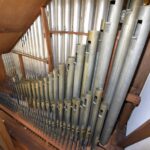
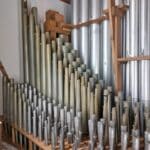
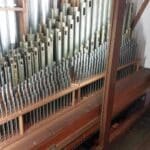
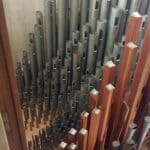
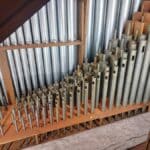
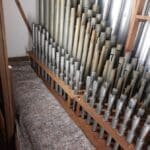
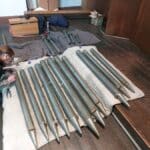
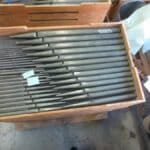
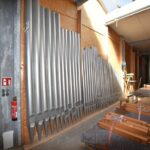
The entire pipes were gently cleaned with a damp cloth, both inside and out. After the restoration of the tuning devices, all pipes could be prepared for the necessary re-voicing.
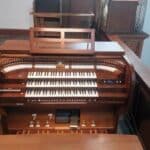
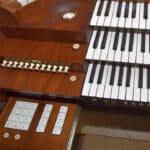
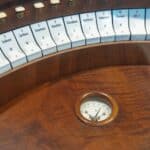
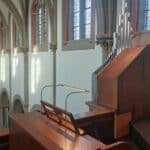
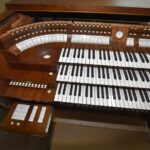
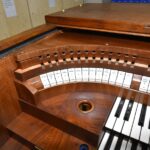
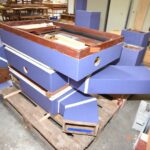
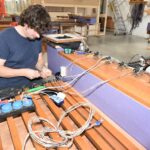
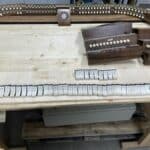
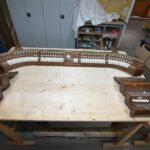
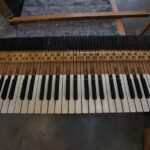
The console was also extensively restored. The stop knobs, whose lettering was barely legible, were renewed. The coverings and trimmings of the keyboards were also renewed. Since the pedal system was also only partially functional, it was completely overhauled.
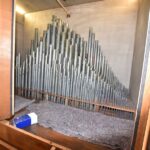
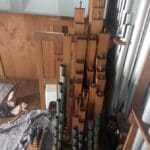
In the course of the work, a simple setter system was also integrated to meet the practical requirements of the large instrument. It was essential to preserve the original functions of the organ, especially the free combinations. By adding a wind chest with twelve pipes C–H of a fifth 10 2/3′, an additional 32′ base for the pedal section was also created.
In February 2026, the voicing work was completed and the organ was returned to service for the congregation. This marked not only the return of an important instrument to its place, but also an important part of the musical and liturgical life of the Rosenkranzkirche.


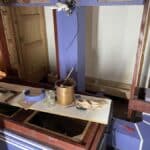
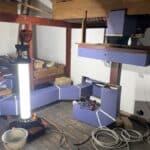
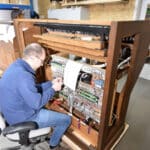
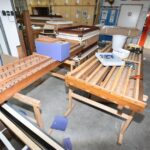
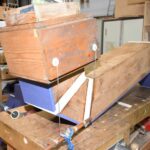
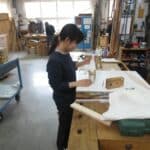
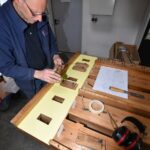
some impressions from the construction phase