
— New organ —
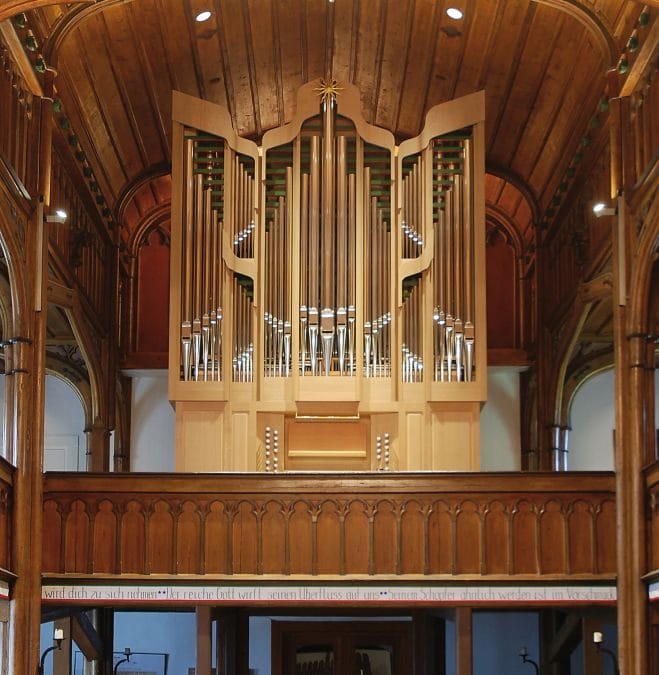
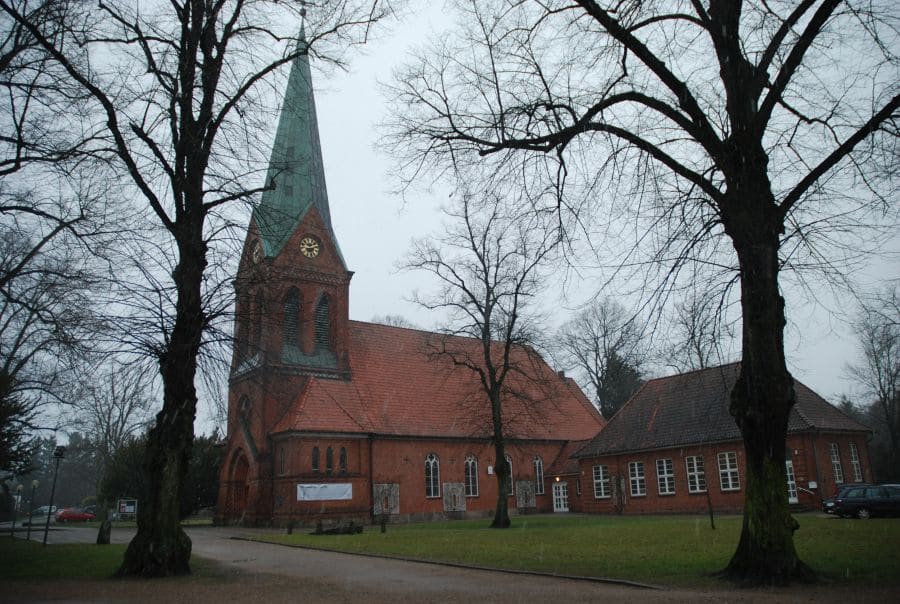
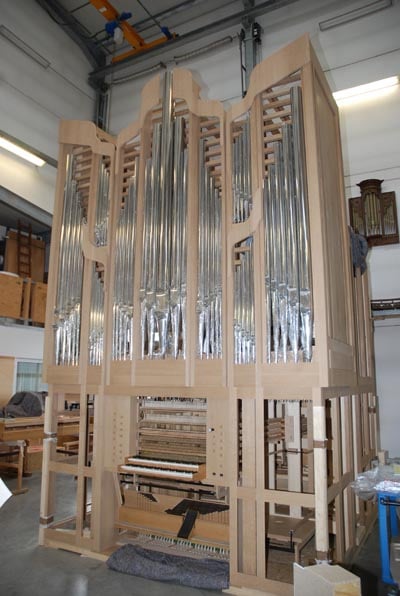
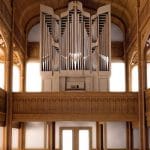
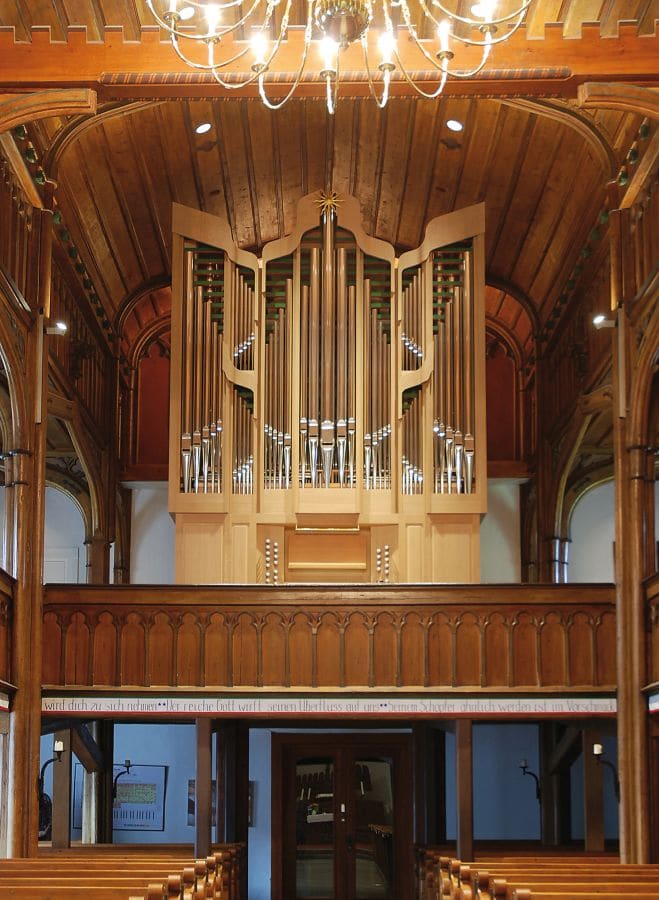 The structural design of the Martin Luther Church in Trittau is the work of architect C.A.W. Lohmeyer dating from the year 1880. The furnishing is to be regarded as an example of high-quality sacred architecture. The interior consists of depressed arches and a serial repetition of the motifs. This style is a typical feature of the English Tudor Style, which commonly served as an example in 19th century in Germany.The design proposal of the new organ was to recapture the characteristics of space in its own proportion system and, if possible, to create additional harmony in interaction with the existing colours in the room. In co-operation with architect Mrs. Christine Johannsen we were able to submit a distinctly modern design proposal for the organ case. The main design element is taken from the arches which are found throughout the room. The individual fields in the pipe front reflect the serial repetitions. Deliberate highlights are set by a play of colours.
The horizontal design elements at the top of the front pipes were colour-coded in two different colours: The front of the beams received a green shade and the bottom red hue. Both colour shades are taken from the room. Seen from the choir, only the colour of the front is visible to the beholder. The more one now approaches the organ coming from the altar, an interesting colour change in the organ front becomes increasingly recognisable. This colour change, together with the changing angle of view at the organ, captivates the viewer and encourages contemplation.


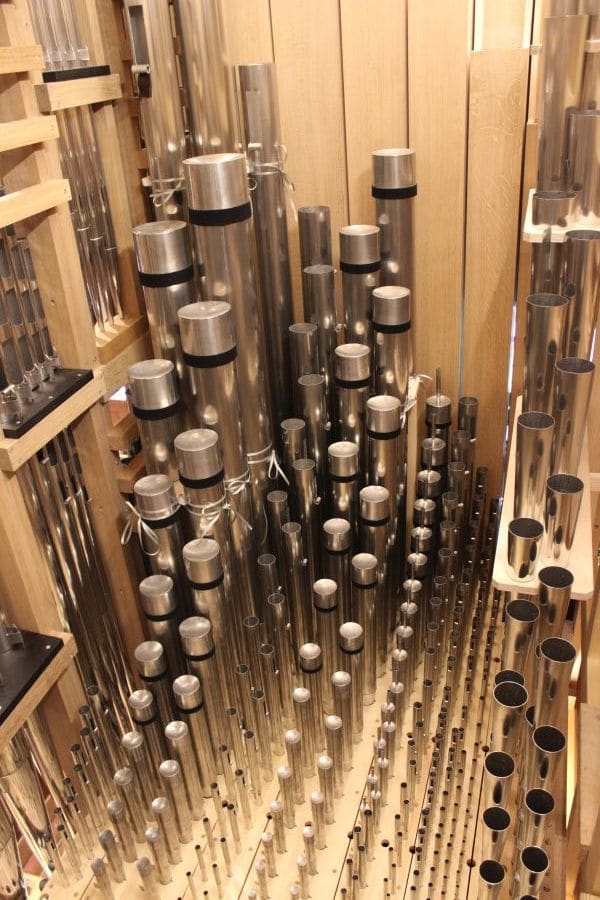
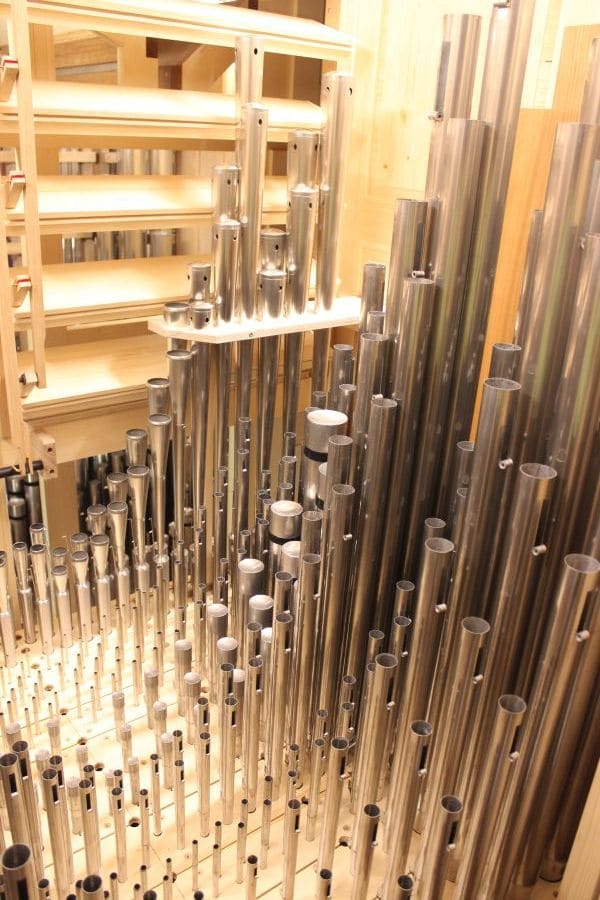
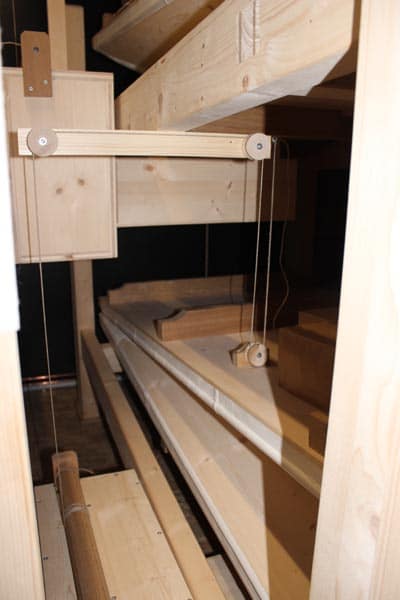
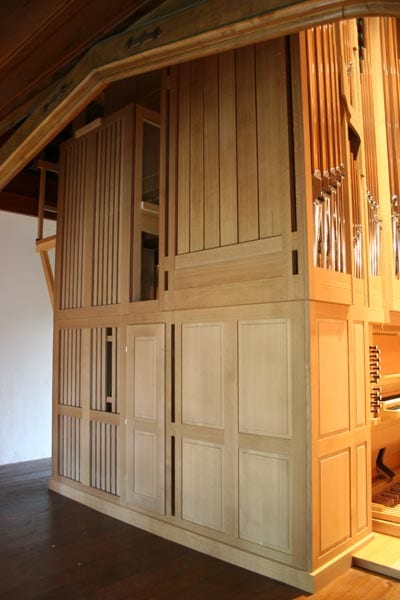
some impressions from the construction of the organ
-
- Die Keilbälge werden in der Balgkammer positioniert

-
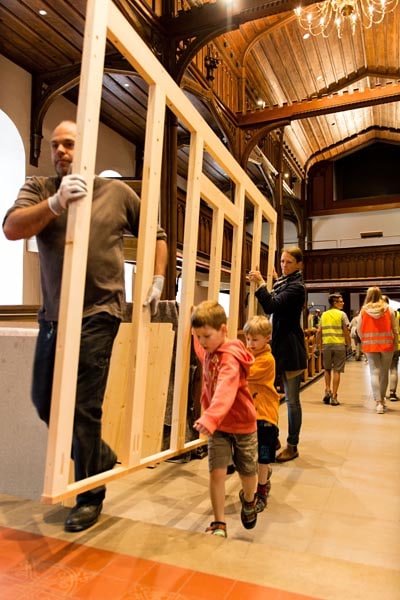
- Alle packen mit an!
-
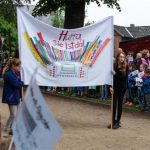
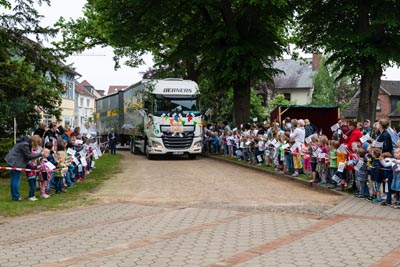
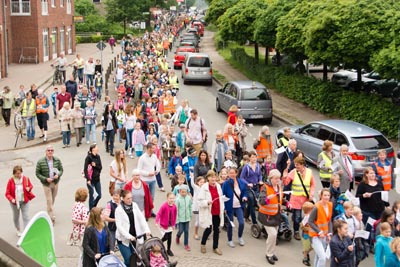
- Die Königin wird willkommen geheißen!

-
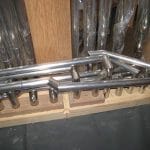
- Zinnkondukten für die Prospektpfeifen

-
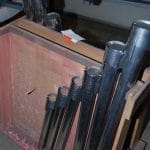
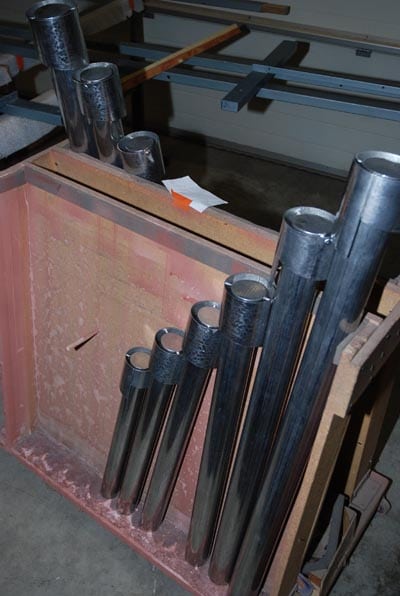
- Die Einsätze für die Innenkropfpfeifen sind auch fertig
-
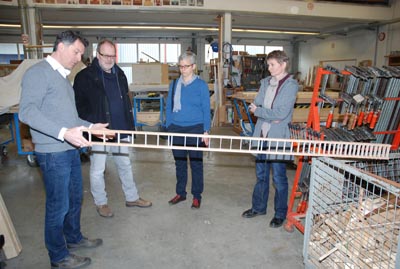
- Architektin Frau Johannsen, Kreiskantorin Frau Fischer und der Orgelsachverständige Herr Petersen (von rechts) beim Werkstattbesuch
-
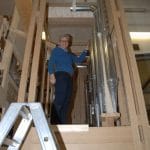
- Kreiskantorin Frau Barbara Fischer freut sich auf ihre Orgel

-
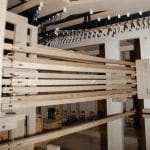
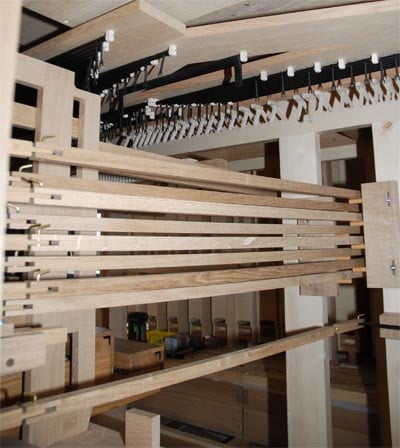
- Spiel- und Registertrakturen werden eingebaut
-
- Ein erster Eindruck
-
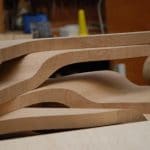
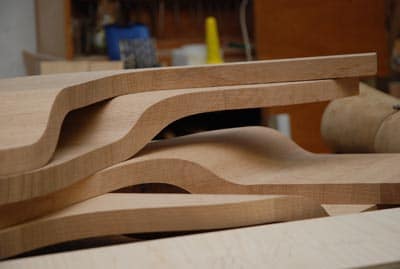
- Das Zierwerk ist bereit zum Einbau
-
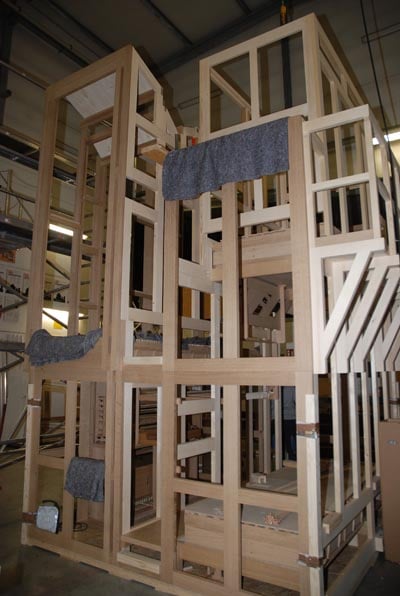
- Blick schräg von hinten mit dem rückwärtigen Stimmgang
-
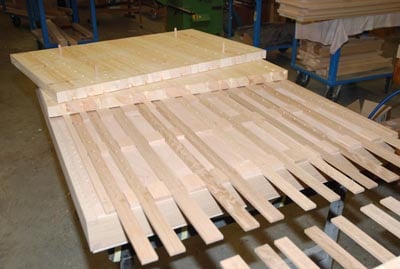
- Die Registerschleifen werden eingepaßt
-
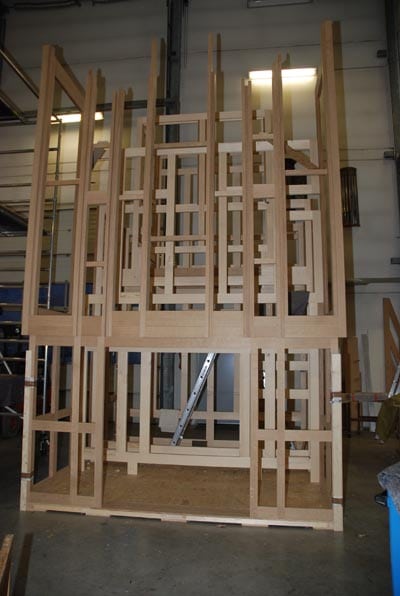
- Das Orgelgehäuse nimmt Formen an
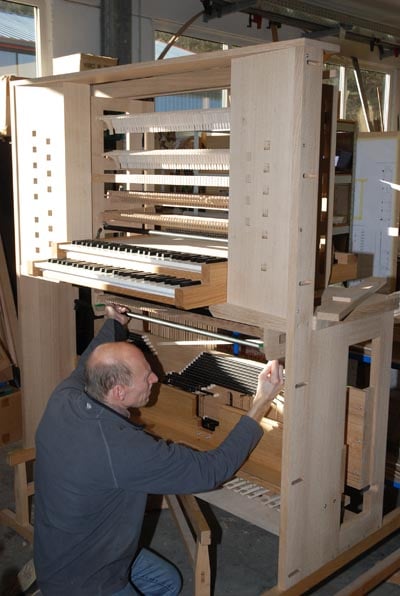
-
- Die fertigen Keilbälge ruhen im Balggestell
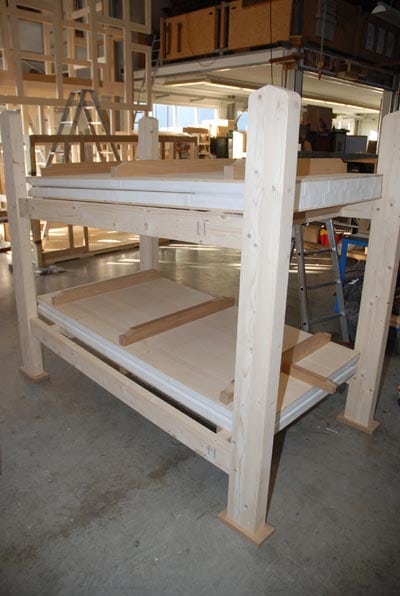
-
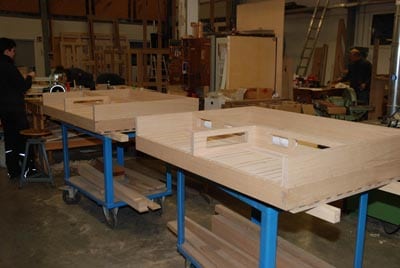
- Windladenfertigung – hier liegt jetzt die Unterseite (Ventilseite) oben
-
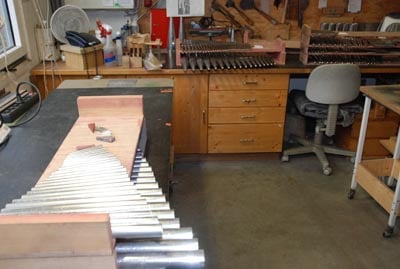
- Die Metallpfeifenfertigung
-
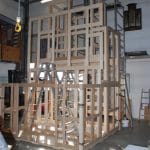
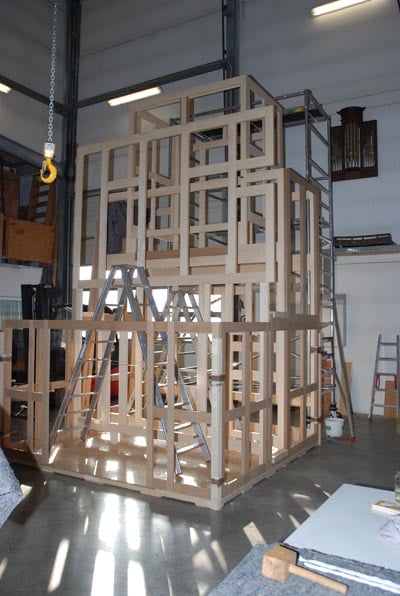
- Der Gehäuseaufbau schreitet voran
-
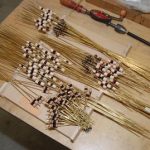
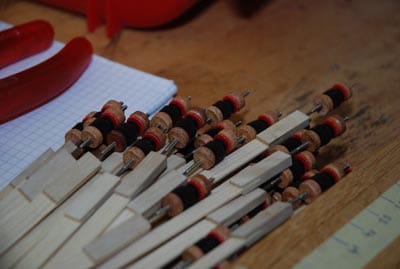
- Die Trakturdrähte des Spieltischs

-
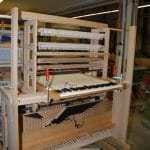
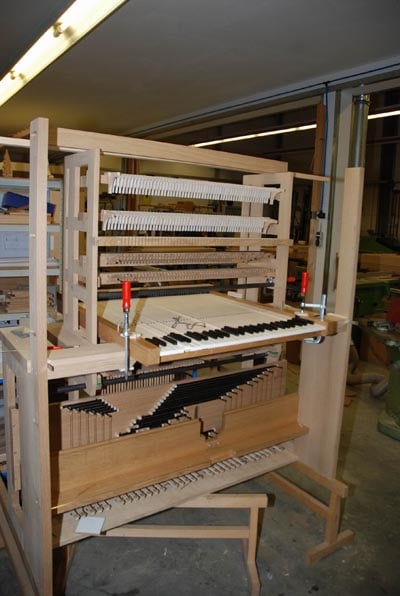
- Die Klaviatur des I. Manuals wird eingebaut
-
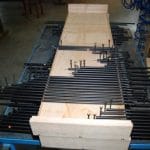
- Die Spielwellen sind fertig zum Einbau in den Wellenrahmen

-
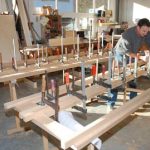
- Die Prospektrahmen werden verleimt

-
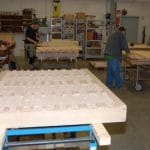
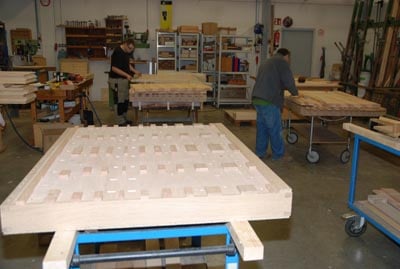
- Windladenfertigung
-
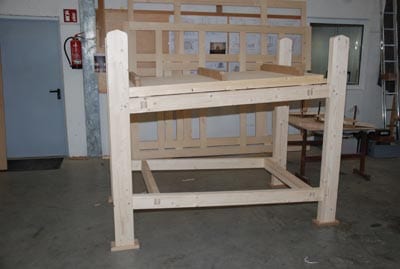
- Das Gestell für die Keilbälge
-
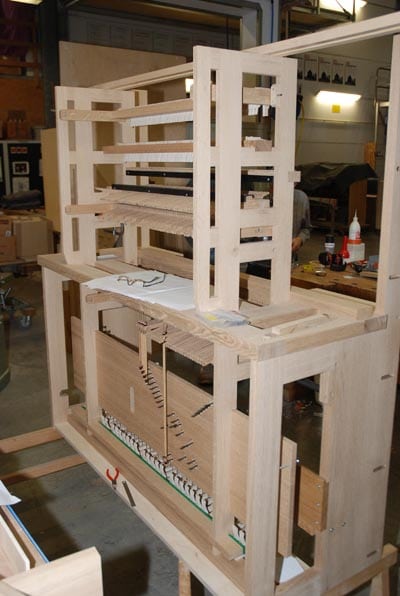
- Blick von hinten auf den Spieltisch
-
- Aufbau des Orgelgehäuses
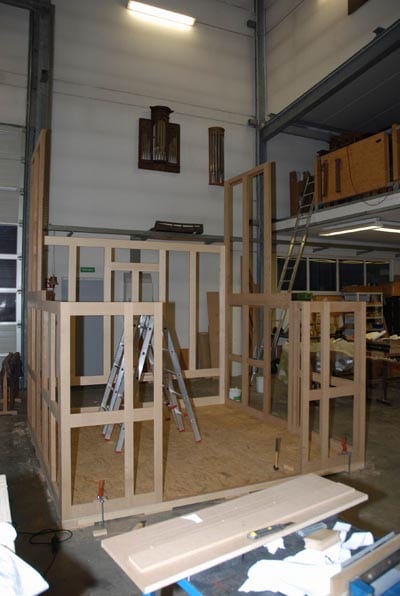
-
- Die ersten Wellenrahmen und Wellenbretter sind vorbereitet
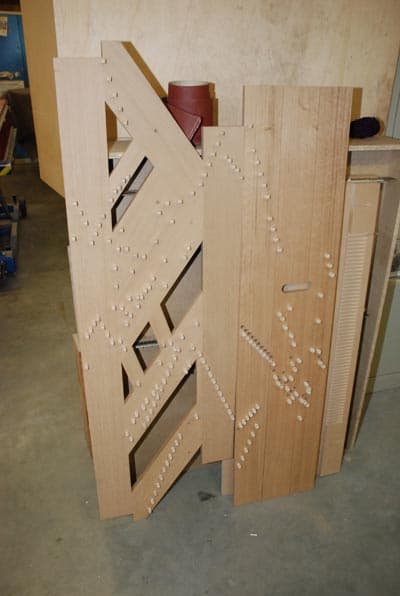
-
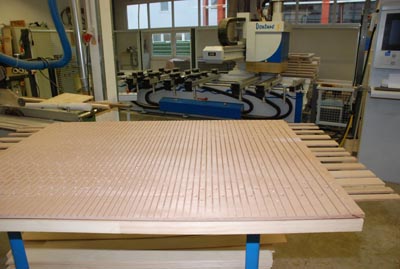
- Die Windladen werden gebohrt
-
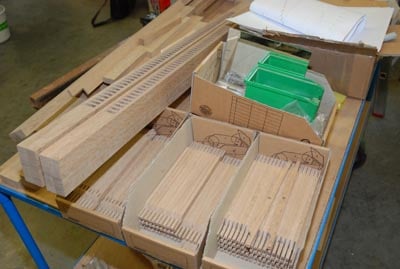
- Die Koppelwippen für den Spieltisch sind fertig
-
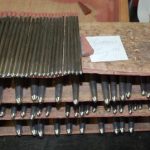
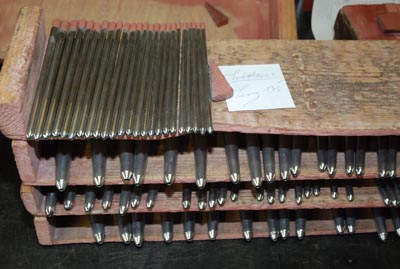
- Fertigung der Metallpfeifen – hier: Terz 1 3/5′
-
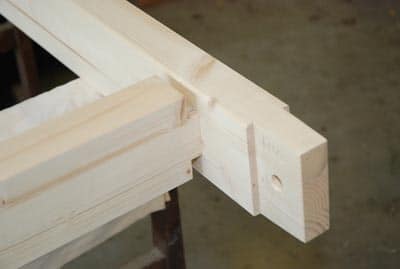
- Mit dem Balggestell für die Keilbalganlage wurde begonnen
-
- Prospektentwurf aus der Auftragsphase

-

- Der Orgelneubau wurde gefördert durch: