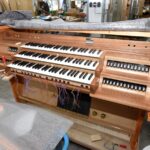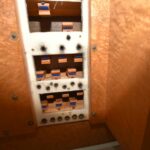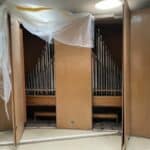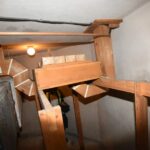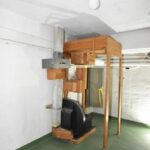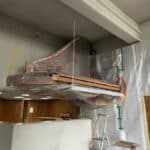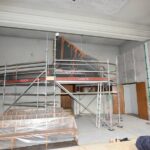
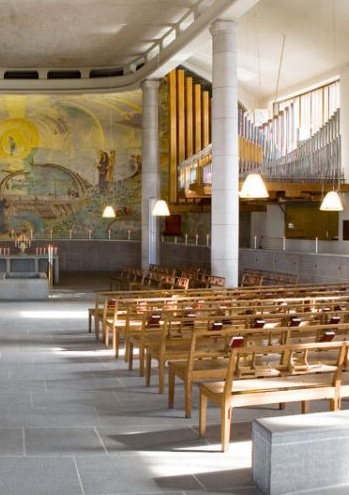
The three organs in the three chapels
Faith (Trons kapell), Hope (Hoppets kapell) and Holy Cross (Heliga Korsets kapell)
— Restoration —
 Skogskyrkogården, located south of central Stockholm, Sweden, is an outstanding cemetery from the early 20th century. It was added to the UNESCO World Heritage List in 1994. According to UNESCO, Skogskyrkogården is a significant 20th-century example of the fusion of architecture and cultural landscape in a cemetery. Its design combines vegetation and architectural elements and uses the uneven terrain to create a landscape that is perfectly suited to its function. In 1912, the Stockholm City Council acquired a former gravel pit area covered with pine trees to create a new cemetery. An international architectural competition for the design was won by two 30-year-old Swedish architects, Gunnar Asplund and Sigurd Lewerentz.
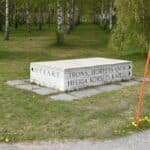
The 108.08-hectare site contains all the elements necessary to express the outstanding universal value of Skogskyrkogården, including the landscape dominated by a forest of tall pine trees, the Forest Chapel (1920), the service building designed by Asplund (1923-24), the Uppståndelsekapellet (Resurrection Chapel, 1925) designed by Lewerentz, and a group of three chapels from 1940, the Trons kapell (Chapel of Faith), the Hoppets kapell (Chapel of Hope) and the Heliga Korsets kapell (Chapel of the Holy Cross), with a shared mortuary and crematorium, designed by Asplund, the granite cross on the lawn in front of the chapels, and the 4 km long granite wall surrounding the site. Each of the three chapels (Trons kapell, Hoppets kapell, and Heliga Korsets kapell) has an organ from the Swedish organ builder Åkerman & Lunds Orgelfabriks AB in Sundbyberg. Åkerman & Lunds was founded in 1860 by Per Larsson Åkerman in Norrmalm. After Åkerman’s death in 1876, Carl Johan Lund took over sole management of the company.

Trons kapell – Stoplist 

Hoppets kapell – Stoplist

Heliga Korsets kapell – Stoplist
The organ in Trons Chapel was purely pneumatic, while the other two were electro-pneumatic. The windchests of all three organs were manufactured by Åkerman & Lunds using the highly efficient US Roosewelt system. More than 30 years ago, changing musical tastes and probably the now maintenance-intensive pneumatic system led to the purchase of three electronic emergency solutions and the decommissioning of the Åkerman & Lund organs. The restoration of the entire complex currently being planned also takes these three historically valuable organs into account.
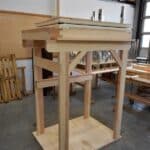
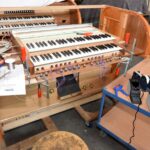
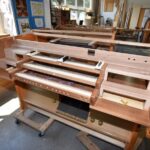
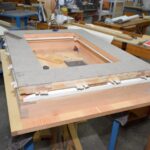
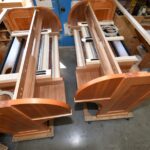
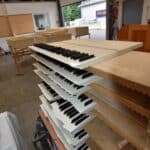
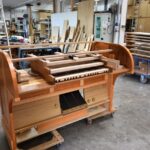
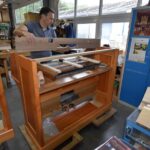
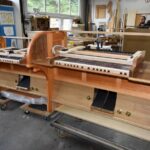
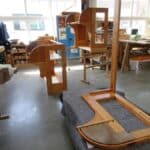
The Stockholm City Cemetery Administration has commissioned a consortium of three organ builders to “revive” these three historically valuable organs. The main work includes the reconstruction of all three consoles, which no longer exist, with the conversion of all windchests in the Trons Chapel organ to an electro-pneumatic control system, the implementation of new electronic organ controls, the reconstruction of the wind supply for the organ in Trons kapell, which no longer exists, and the pipe work, some of which is no longer available, the complete restoration of the existing historical pipe work, and the technical overhaul of all three organs with final voicing. The entire project is scheduled for completion in mid-2028 with the completion of the organ in Heliga Korsets kapell. As the main contractor, we were able to find two excellent partner workshops in the form of organ builders Jan Börjeson from Stockholm and Andreas Brauner from near Gothenburg. The project is being supervised by the organ consultant Mr. Göran Grahn and the responsible employees of the Stockholm Monument Preservation and Cemetery Administration.

The team in the Golden Hall of Stockholm City Hall
(from left to right) Organ consultant Göran Grahn, Marc Kuhlmann (Weimbs Organ Builders), Katarina Trollhagen (Börjeson Organ Builders), Jan Börjeson, Frank Weimbs, Andreas Brauner
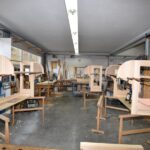
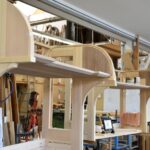
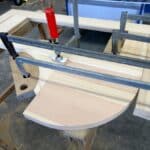
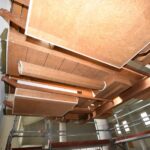
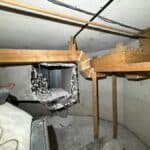
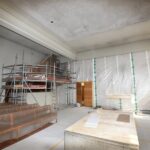
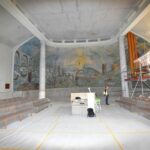
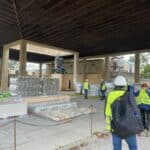
some impressions from the construction phase